


When Brig. Gen. Marwa Saoud first joined the Lebanese Armed Forces (LAF), she did not expect to one day have an emblem of a star and two swords on her shoulders, signifying a military grade that has traditionally been dominated by men.
“Joining the army was a childhood dream I didn’t think would come true. But when the military institution opened its doors for women to apply as officers, I did,” she recalled. Brig. Gen. Saoud was among the first 32 women to be recruited into the Lebanese army in 1992 as specialized officers, preceded in 1990 by the first intake of female non-commissioned officers.
After serving in different positions and departments, Brig Gen. Saoud now leads the army’s gender department and spends her days developing and implementing policies that promote gender mainstreaming throughout Lebanon’s military institution.
Not far from Saoud’s office in the foothills of Mount Lebanon, Col. Diala Mohtar of the Internal Security Forces (ISF) recounts her surprise upon discovering that she and another friend would be the first two women to join Lebanon’s police force after they applied in 2001. “We read a vacancy announcement in the newspaper that said the ISF was recruiting specialized officers. There was no reference in it to the fact that the positions were exclusively for men, so we applied,” she said.
And when they both passed physical and substantive entrance examinations with flying colors, they could not but be admitted. In addition to being an information technology specialist, Col. Mohtar now also serves as a gender focal point for the ISF.
At the Directorate of General Security, the recruitment of women began earlier than in the army, in 1973, because of the entity’s “direct contact with citizens and civilians, including women and children, such as at the airport and border crossings,” explained Capt. Christiane Abou-Zeid, who is also a gender focal point at General Security.
Women now represent just over 5 per cent of the LAF, 6 per cent of the ISF and 12 percent of the General Security forces.
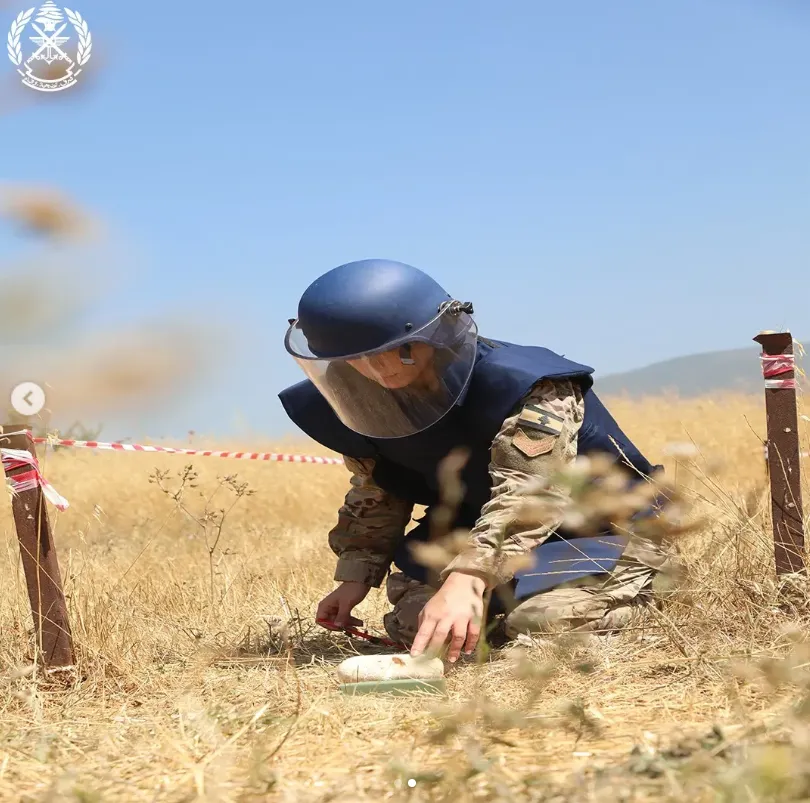
Lebanon’s army has long been a stalwart of stability and a trusted, non-denominational institution in a country which seeks to maintain coexistence in a diverse and vibrant ecosystem of confessions and societies. International attention on the role of the Lebanese Armed Forces, alongside Lebanon’s other security services, has ratcheted up in response to recent hostilities, which began with an exchange of fire between Hizbullah and the Israel Defense Forces along the Blue Line in October 2023 and have since reached almost all governorates of Lebanon.
While headlines abound regarding the challenges facing the LAF in its efforts to advance a State monopoly on all arms in Lebanon – including welfare and capability deficits exacerbated by the country’s 2019 financial collapse – there are other stories to be told, including those of the women across Lebanon’s security sector, bucking trends and working, in their own ways, towards the country’s stability and evolution.
Gender Champions and Trust Building
Whether at the LAF, the ISF or General Security, the breakthrough for women has been attributed to strong leadership. In 2018, former LAF Commander Gen. Joseph Aoun, current President of the Republic, launched the recruitment of 4,000 female non-commissioned officers. Many of those who had previous specializations were given the opportunity to become officers a few years later in a separate cadet recruitment.
Other “gender champions” within the military institution also supported women’s representation and empowerment as a “result of conviction and necessity”, according to army sources.
Since the 1990s, women have proven their effectiveness in areas such as logistics, medical units and engineering. It later became imperative, according to the LAF leadership, to embed women in more operational situations to accompany developments all over Lebanon. This was piloted in a Land Border Regiment in North Lebanon. While not directly engaging in high-risk operations such as counter-smuggling or crackdowns on illegal cross-border activities, female soldiers within this regiment played an important role in the process of asserting state authority and building trust by supporting vulnerable populations and engaging in Civil-Military projects.
“Women in the LAF have proven that their presence is not only symbolic but also effective,” said Brig. Gen. Saoud.
Lt. Rosalia Hojaij of the LAF Military Policy further underscored the capabilities of women in the security sector. “Women can do all the functions that men do. They carry out inspections, raids, investigations, they collect forensic evidence, inspect crime scenes, and work in prisons and on tanks.”
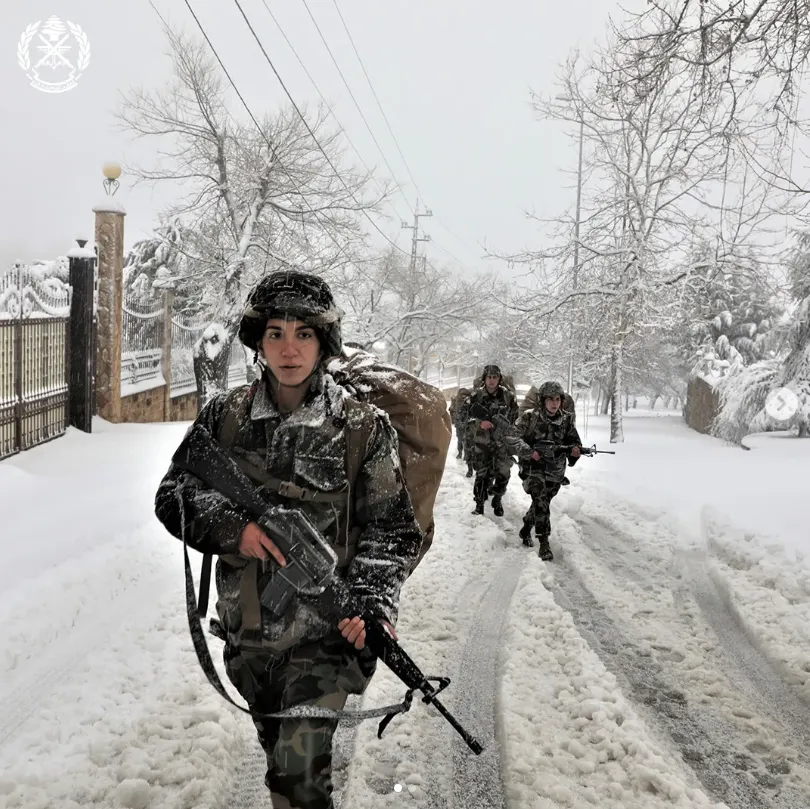
And, such duties are carried out with a deep sense of pride and belonging, according to many. “The most difficult decision I made was when I left my daughter to join the military academy to become an officer. I faced psychological and physical pressure. But I was not defeated and did not submit,” shared Lt. Josiane Habshi, who is currently the only female officer serving with the army’s Marine Commandos Regiment, leading a group of 30 female non-commissioned officers. “Most gratifying is the sense of pride I feel just being part of this institution, which lives up to its motto of Honor, Sacrifice and Loyalty,” she added.
More Administrative, Less Operational
Making the security sector more inclusive has necessitated change. Several steps have been taken, such as amending trainings that were causing women pelvic injuries or introducing women’s changing rooms.
“When I gave birth to my first daughter, I was told I would get only four days of leave, which is what the male colleagues used to get for their paternity,” Col. Mohtar of the ISF, who now has four children, recalled, laughing. “Those rules have of course changed to align with national maternity standards of at least two months.”
Several sources also attested that they are paid the same and believe that they have access to the opportunities available to their male counterparts. But in both the army and law enforcement forces, stereotypes persist, with some women arguing that there is more pressure on them to prove they deserve to be where they are. Moreover, with most women in Lebanon’s security sector working in administrative positions, it is clear that both institutional and societal barriers remain.
According to senior sources within the military institution, boosting women’s representation in combat positions still needs time and effort, including to foster a conducive internal culture within male-dominated institutions, to create the necessary infrastructure for women serving in the field and to address a set of social challenges that go beyond the institution itself.
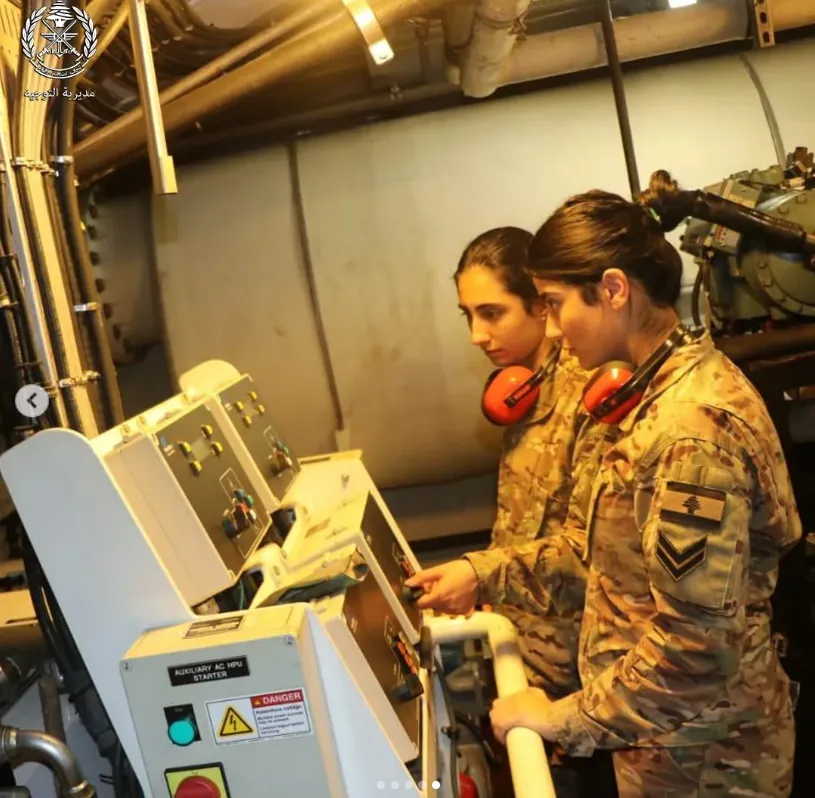
“Not only are (women) able, they have mental capacity, leadership capacity, physical capacity to lead any unit. But the infrastructure and supra-structure we must create is not yet ready. It is not just about geography or about physical infrastructure, it is about the social system in Lebanon as a whole,” a senior LAF official assessed.
Furthermore, women have yet to assume key decision-making positions, such as in the leadership of operational units.
In terms of recruitment, advances are not always consistent, with institutions facing hiatuses related to financial or governance constraints.
But, there are some bright spots: equal numbers of men and women graduated from the military academy in 2022, and 55 per cent of ISF recruits were women in 2025 – not sufficient to signify a trend but a solid foundation on which to build.
“We are encouraging more women to apply, not just to administrative positions,” said Col. Mohtar of the ISF, noting that more women were being posted in different units, such as traffic police, judicial brigades or in prisons and stations across Lebanon.
A More Strategic Approach
More recently, the rationale behind advocating gender mainstreaming became more strategic, propelled forward by a progressive mindset in the command of the LAF, ISF and General Security, as well as support from the international community.
United Nations Security Council resolution 1325 (2000), which created the Women, Peace and Security agenda, offered an important lever for the framing of gender equality and empowerment within the military and security institutions, particularly after a National Action Plan for its implementation was endorsed in Lebanon, recommending the increase of the number of women in military and security agencies and enhancing their roles within these institutions.
Several countries have supported the LAF and other entities in those activities, including Canada, Norway, the United Kingdom, the United States and others, with technical support implemented, in many cases, through the United Nations, including UN Women.
But the most important drivers of change came from within. “The establishment of the LAF gender department in 2022 was in itself an achievement, allowing for the inclusion of concepts of equality in developing military policies and trainings,” said Brig. Gen. Saoud.
More recently, some 85 gender focal points were designated across different LAF departments to help push forward policies to advance gender mainstreaming and inclusion.
To make the process more operational, a gender strategy was also developed at the LAF and work is underway on an action plan to implement it. “We also recently endorsed the policy for Prevention, Response and Punishment of Sexual Harassment and Domestic Violence within the military institution in collaboration with the National Commission for Lebanese Women and UN Women and are now working on its action plan,” added Brig. Gen. Saoud.
Similarly, Col. Mohtar said the ISF prioritizes the countering of Gender-based Violence, with a hotline for complaints now in place, in parallel to regular trainings and sensitization efforts delivered to the cybercrime bureau, human trafficking bureau and judiciary brigades.
In turn, Capt. Abou-Zeid explained that, “At the General Security, we don’t have a Gender Department but we have a gender network with focal points in different centers in different cities, who report on any gender-related incidents, including any intimidation or harassment involving both General Security members and citizens.”.
At the ISF, an internal gender audit and a gender action plan were finalized in 2024. Col. Mohtar noted that, subsequently, a report was developed to make recommendations to the senior leadership on addressing hurdles to gender mainstreaming and women’s equal representation in the short, medium and long term.
Women are also gradually taking on more visible field positions, according to gender focal points. One woman was assigned head of a police station in Beirut and at the General Security, while several women are leading centers outside the Beirut headquarters. In addition, Capt. Abou-Zeid said, “Among the General Security units that carry out raids and inspections, there is one that is all female. When there are raids that require the presence of women, they are dispatched.”
While there is still a long way to go, the achievements made so far have set the military and security institutions on a good trajectory to reinforcing women’s representation and integration. And, while questions abound regarding ongoing political efforts to halt hostilities in and around Lebanon, one thing is clear: women will be part of the solution.


